The Original Tabata Study: What the Research Actually Found
Dr. Izumi Tabata's 1996 research, explained
In 1996, Dr. Izumi Tabata and his research team published a landmark study examining a high-intensity interval training method that would eventually become known around the world as “Tabata.”
Today, the word Tabata is everywhere. You'll find Tabata workouts in gyms, fitness apps, home workout programs, CrossFit boxes, and training facilities around the world. But what exactly happened in the original Tabata study?
The story begins in Japan, where a high-intensity interval training method was being used by the Japanese national speed skating team. The protocol was introduced by the team's head coach, Kouichi Irisawa, and was later scientifically studied by Dr. Izumi Tabata and researchers at the National Institute of Fitness and Sports in Kanoya, Japan.
In 1996, the researchers published their findings in the journal Medicine & Science in Sports & Exercise under the title: “Effects of moderate-intensity endurance and high-intensity intermittent training on anaerobic capacity and VO2 max.”
The Tabata Protocol
- 20 seconds of high-intensity exercise
- 10 seconds of rest
- Repeat for 8 rounds
- Total interval time: 4 minutes
But the original research is more interesting—and more nuanced—than simply “exercise for four minutes.” Let's take a closer look.
VO2 Max and the Human Energy Systems
Before diving into the study, it helps to understand three important concepts: aerobic energy, anaerobic energy, and VO2 max.
What Is Aerobic Exercise?
The aerobic energy system uses oxygen to help produce the energy your muscles need to work. It plays a major role during lower- and moderate-intensity activities that can be sustained for longer periods, such as jogging, cycling, swimming, hiking, and rucking. As exercise intensity increases, your body's demand for oxygen also increases.
What Is Anaerobic Exercise?
When exercise becomes extremely intense, your aerobic system cannot supply energy quickly enough to meet the full demand. Your body must rely more heavily on anaerobic energy systems, which can rapidly provide energy without relying directly on oxygen.
Anaerobic energy production is especially important during short, intense efforts such as sprinting, jumping, heavy lifting, and other explosive exercise. These systems can produce energy quickly, but they cannot sustain extremely high output for very long.
What Is VO2 Max?
VO2 max is the maximum amount of oxygen your body can take in and utilize during intense exercise. It is commonly expressed as milliliters of oxygen per kilogram of body weight per minute (ml/kg/min). VO2 max is widely used as a measure of aerobic and cardiorespiratory fitness. Generally, a higher VO2 max indicates a greater ability to deliver and use oxygen during exercise.
What Was the Goal of the Tabata Study?
Dr. Tabata and his colleagues wanted to compare the effects of two very different approaches to training: moderate-intensity endurance training versus high-intensity intermittent training. In particular, they wanted to determine how each type of training affected:
- VO2 max, a measure of aerobic capacity
- Maximal accumulated oxygen deficit, which the researchers used to estimate anaerobic capacity
Both training programs lasted six weeks.
Who Participated in the Study?
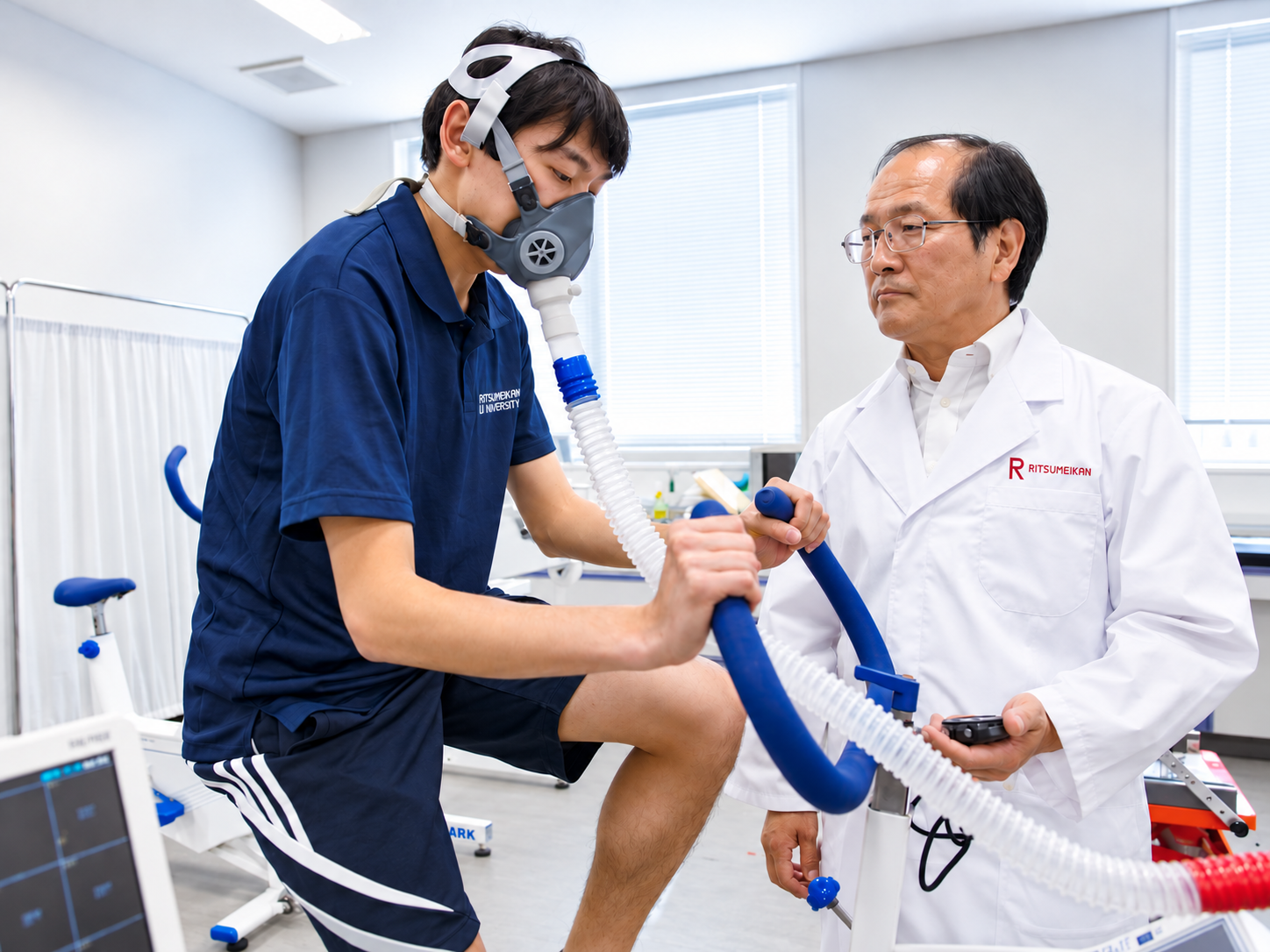
The study involved young, physically active male participants who trained on mechanically braked cycle ergometers. The experiments were conducted at the National Institute of Fitness and Sports in Kanoya, Japan. The participants were divided into training groups that followed very different exercise programs.
Group 1: Moderate-Intensity Endurance Training
- 5 days per week
- 60 minutes per training session
- At approximately 70% of VO2 max
- At a cycling cadence of approximately 70 RPM
- For 6 weeks
This was essentially traditional steady-state aerobic training.
Group 2: High-Intensity Interval Training
The high-intensity group also trained 5 days per week for 6 weeks, but its program was different. On four days each week, participants performed:
- 7–8 intervals
- 20 seconds of exercise per interval
- Approximately 170% of the workload associated with VO2 max
- Approximately 85 RPM
- 10 seconds of rest between intervals
The exercise session was stopped when a participant could no longer maintain the required cycling cadence. As participants adapted to the training, resistance could be increased to maintain the required intensity.
Importantly, the fifth training day was different. On that day, participants performed approximately 30 minutes of moderate-intensity cycling at 70% of VO2 max, followed by four 20-second high-intensity intervals.
Original Tabata Study Training Comparison
| Moderate-Intensity Group | High-Intensity Group | |
|---|---|---|
| Training duration | 6 weeks | 6 weeks |
| Frequency | 5 days/week | 5 days/week |
| Primary training | 60 min continuous cycling | 7–8 × 20-sec intervals |
| Primary intensity | ~70% VO2 max | ~170% VO2-max workload |
| Rest between intervals | — | 10 seconds |
| Primary interval session | 60 minutes | ~4 minutes |
| Primary adaptation | Aerobic + anaerobic | Aerobic + anaerobic |
Was the Original Study Really Just Four Minutes of Exercise a Day?
Not exactly. This is one of the most common misconceptions about the original Tabata study. Four days per week, the high-intensity portion of the participants' training really was approximately four minutes long.
However, on the fifth training day, the participants also completed approximately 30 minutes of moderate-intensity cycling before performing four high-intensity intervals. Participants also performed warm-up activity associated with the training sessions.
So while the famous 20 seconds on / 10 seconds off × 8 protocol was central to the study, describing the entire six-week training program simply as “four minutes of exercise per day” leaves out important details.
How Can Someone Exercise at 170% of VO2 Max?
At first glance, exercising at 170% of VO2 max sounds impossible. How can you exceed 100% of a maximum?
The important distinction is that the researchers were referring to exercise intensity or workload relative to the workload associated with VO2 max. They were not saying participants were consuming 170% of the maximum amount of oxygen their bodies could use.
At such a high workload, the aerobic energy system cannot meet the body's entire energy demand. Anaerobic energy systems must contribute heavily to sustain the effort. That's also why this intensity can only be maintained for a short period of time.
How Did the Researchers Measure the Results?
Before and throughout the training period, the researchers measured two major variables. VO2 max was used to measure the participants' aerobic capacity—the maximum amount of oxygen their bodies could utilize during intense exercise. The researchers estimated anaerobic capacity using a measurement called maximal accumulated oxygen deficit.
This allowed them to examine whether the two training methods produced different adaptations in the aerobic and anaerobic energy systems.
Results After Six Weeks
Moderate-Intensity Group
After six weeks, VO2 max increased significantly and anaerobic capacity did not significantly change. Average VO2 max increased from approximately 53 to 58 ml/kg/min, an improvement of roughly 10%. Traditional endurance training therefore produced the expected improvement in aerobic fitness but did not significantly increase the measure of anaerobic capacity used in the study.
High-Intensity Interval Group
After six weeks, VO2 max increased significantly and anaerobic capacity also increased significantly. Average VO2 max increased from approximately 48 to 55 ml/kg/min, an improvement of roughly 15%. Anaerobic capacity increased by approximately 28%. Interestingly, much of the improvement in anaerobic capacity occurred during the first four weeks of training.
| Moderate-Intensity Training | High-Intensity Training | |
|---|---|---|
| VO2 max | Increased ~10% | Increased ~15% |
| Anaerobic capacity | No significant change | Increased ~28% |
| Improved aerobic capacity | Yes | Yes |
| Improved anaerobic capacity | No significant improvement | Yes |
What Did the Tabata Study Show?
The study demonstrated an important difference between the two training approaches. Six weeks of moderate-intensity endurance training improved aerobic capacity but did not significantly improve anaerobic capacity.
The high-intensity interval program, on the other hand, significantly improved both aerobic and anaerobic capacity. The researchers concluded that the high-intensity intermittent training protocol appeared to place substantial demands on both energy systems. That combination is a major reason the study became so influential.
What the Tabata Study Did NOT Show
It did not prove that Tabata is the best form of exercise. Different forms of exercise produce different adaptations. Traditional endurance training, strength training, high-intensity interval training, and other forms of physical activity can all play valuable roles in a well-rounded fitness program.
It did not show that everyone should only exercise for four minutes. The researchers studied a very specific high-intensity training program in young, physically active men. The study was not designed to determine the ideal amount of exercise for the general population.
It did not show that every 20/10 workout produces the same physiological response. The original participants were cycling at an extraordinarily high intensity. Today, the term “Tabata” is commonly used to describe workouts built around the 20-seconds-work / 10-seconds-rest format, even when the exercises and intensity are different from those used in the original laboratory study.
The timing structure may be the same, but doing bodyweight squats, push-ups, walking intervals, or other exercises at a moderate effort should not be assumed to reproduce the exact physiological demands of the original experiment.
The Significance of the Tabata Study
High-intensity interval training existed long before the 1996 Tabata study, and athletes had been using various forms of interval training for decades. What made the Tabata research particularly influential was its demonstration that a very short, extremely intense interval protocol could provide a powerful stimulus to both aerobic and anaerobic energy systems.
Over time, the 20/10 structure became known simply as the Tabata protocol. Today, variations of Tabata-style training can be found in home workouts, group fitness classes, athletic training programs, CrossFit workouts, fitness apps, boot camps, and gyms around the world.
Does Tabata Have to Be All-Out?
This is where it's useful to distinguish between the original Tabata study and modern Tabata-style workouts. The original study used extremely high-intensity cycling performed by young, physically active participants under controlled conditions.
Modern Tabata workouts often use the same 20-second work / 10-second rest structure with a much wider variety of exercises and intensity levels. That flexibility is one reason the format has become so popular.
A beginner might use 20/10 intervals for relatively simple bodyweight movements, while an experienced athlete might use the same timing structure for extremely demanding conditioning work. These workouts can both use the Tabata format, but they should not be assumed to produce exactly the same physiological response as the original research protocol.
Key Takeaways from the Original Tabata Study
- The famous Tabata structure uses 20 seconds of work followed by 10 seconds of rest for 8 rounds.
- The protocol studied by Dr. Tabata originated in the training of the Japanese national speed skating team.
- Dr. Izumi Tabata and his colleagues scientifically evaluated the training method.
- The study compared moderate-intensity endurance training with extremely high-intensity interval training over six weeks.
- Moderate-intensity training improved aerobic capacity but did not significantly improve anaerobic capacity.
- The high-intensity training program improved both aerobic and anaerobic capacity.
- The original high-intensity protocol was much more demanding than many workouts commonly described as “Tabata” today.
- The study did not conclude that Tabata should replace endurance training, strength training, or other forms of exercise.
More than 30 years later, the simple 20 seconds on, 10 seconds off structure remains one of the most recognizable interval-training formats in fitness. And it all traces back to an extraordinarily demanding training method used by Japanese speed skaters—and the research team that decided to put it to the test.
Original Research
Tabata I, Nishimura K, Kouzaki M, et al. Effects of moderate-intensity endurance and high-intensity intermittent training on anaerobic capacity and VO2 max. Medicine & Science in Sports & Exercise. 1996;28(10):1327–1330.