How We Make a Tabata Song
Behind the music at Tabata Songs
It starts with a song. But not every song works as a Tabata Song.
The tempo has to be right. The feel has to be right. You need to feel the intensity build during those 20 seconds of work—and almost sense the rest coming before you hear the countdown. That's one of the things we've learned after more than a decade of making music specifically for Tabata workouts.
And there's something else people are sometimes surprised to learn: we don't take an existing recording, put a “3, 2, 1, GO!” over the top, and call it a Tabata Song. We create every Tabata Song from scratch.
Step One: Finding the Right Song
Choosing the song is more complicated than simply picking something popular. Some songs naturally lend themselves to the Tabata format. Others don't.
We're listening for tempo, energy, dynamics, rhythm, and how naturally a song can breathe within the 20-second work and 10-second rest structure. Can we make the GO sections feel exciting? Can you feel the transition into the rest? Can we pull the energy back for 10 seconds without losing the momentum of the song—and then make the next GO hit even harder?
Before committing to a song, we'll usually create a rough version and work out with it ourselves. Because ultimately, that's the test. Does it feel good as a Tabata Song? If it doesn't, we move on.
Then We Build It From the Ground Up
Once a song passes that test, it's time to make the real thing. We build our own arrangement specifically for the Tabata format and begin recording. Drums. Bass. Guitar. Piano. Percussion. Synths. Strings. Whatever the song calls for.
Some of that happens right here at the Tabata Songs studio. We have a small in-house studio team with a pretty wide range of musical abilities between us. But one of our favorite parts of making Tabata Songs is collaborating with other musicians.
Over the years, we've built a network of incredible singers, instrumentalists, and producers around the world. Sometimes they come into our studio. Other times, we're sending sessions back and forth across thousands of miles.
One Song. Musicians Around the World.
Our version of “Eye of the Tiger” is a great example. Guitar and piano were recorded here in our studio. But that was only the beginning.
We collaborated with a vocalist in Los Angeles, string players in Serbia, an electric guitarist in Ukraine, and a bass player in Nigeria. Different musicians. Different studios. Different parts of the world. One Tabata Song.
That's one of the things we love most about modern music production. Our studio may be home base, but the musicians making the music can be almost anywhere.
Making It Familiar—Without Simply Copying It
Covering a well-known song presents another challenge. People love the original for a reason.
When someone presses play on a Tabata version of a song they know, they want that familiar melody, energy, and feeling. But we're also creating an entirely new recording designed for an entirely different purpose. So there's a balance: how do we capture what people love about the original while making the Tabata Songs version our own?
Sometimes that means changing instrumentation. Sometimes it's a different musical texture or vocal approach. And sometimes the Tabata structure itself forces us to rethink how a familiar part of the song works. We're not trying to make a carbon copy. We're trying to make a version that feels familiar—and feels great to work out to.
The Voice of a Tabata Song
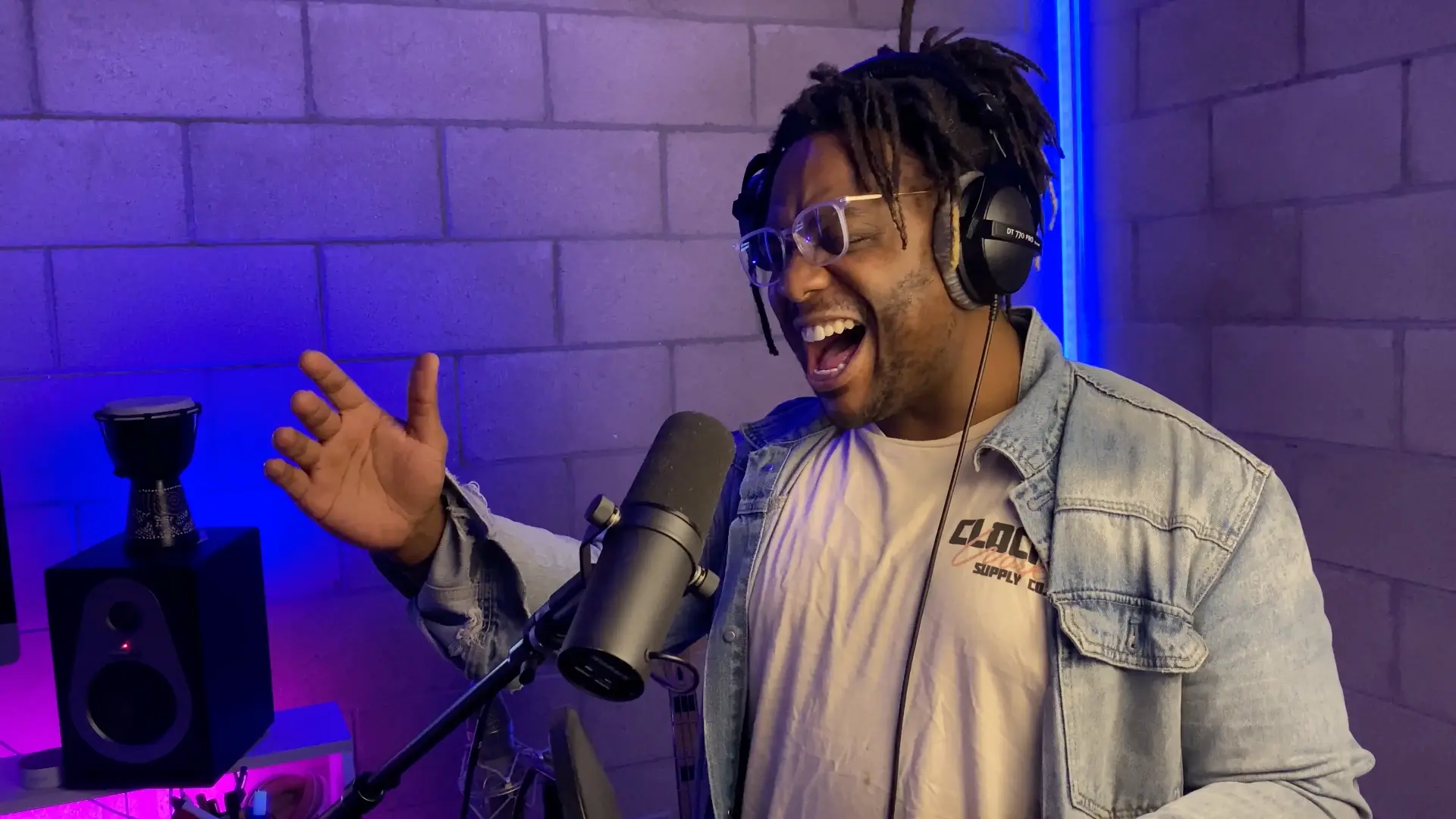
Once the instrumentation is taking shape, we record the vocals. Sometimes they're recorded in-house. Often, we collaborate with one of the many incredible vocalists we've worked with over the years.
And then there are the vocals every Tabata Songs listener knows:
3… 2… 1… GO!
Those coaching cues might sound like the simplest part of the production. They're not. The countdowns, transitions, dynamics, and musical arrangement all have to work together. Ideally, you shouldn't need to stare at a timer waiting for the next interval. You should be able to feel it coming. That's when we know we've got it right.
The Details You Might Never Notice
Once everything has been recorded, we get obsessive. There are the big things: arrangement, vocals, drums, guitars, dynamics, mixing, and mastering. And then there are all the tiny things.
- A shaker buried in the rhythm.
- A tambourine hit that gives a section just a little more lift.
- A backing vocal you might barely notice.
- One note that makes the transition into the next interval hit harder.
Every word. Every note. Every drum hit. Every little piece of percussion. It's there for a reason.
Our studio is modern and filled with today's digital production tools. We use technology throughout the recording, editing, mixing, and mastering process. But we don't use AI to generate our music. Ever.
Real instruments. Real vocals. Real people.
Building the Tabata Songs Catalog
We're always thinking about what's next. We try to maintain a catalog that mixes songs people have loved for decades with the newest songs people are listening to right now. One month that might mean taking on a classic. The next, it might be a song that's suddenly everywhere.
Our goal is to release at least one new Tabata Song every month and keep giving people something fresh to work out to. But whether we're working on a brand-new hit or a song that's been around for 40 years, the standard is the same: it has to work as a Tabata Song.
The Best Part
We're musicians, so naturally we love making music. But there's something uniquely rewarding about making this music.
When we see a stream of a Tabata Song or a view on one of our workout videos, there's a pretty good chance someone, somewhere, is working hard at that exact moment. They're running. Lifting. Jumping. Sweating. Teaching a class. Getting back into shape. Training for something. Or simply doing something good for their health. And our music gets to be part of it.
Millions of workouts have happened to Tabata Songs all over the world, and after all these years, we still think that's pretty amazing.
So the next time you press play on a Tabata Song, give it a close listen. Listen past the countdown. Listen for the bass line. The backing vocals. The guitar tucked behind the chorus. The shaker. The strings. The tiny details hiding in the mix.
You might be surprised by how much is in there.